 Hey readers here is the essay by a guest writer, Paula Ebert, who is an award-winning journalist and photographer! This is a long read, but very much worth your time. All of the photos on this page are copyrighted.
check out Paula’s blogs too: (you can also find them on my blogroll) http://www.paula-glover.blogspot.com/
http://www.kansas-mornings.blogspot.com/
Paula Ebert
Life Walking
My grandchildren came to visit us on the farm this summer, and my granddaughter, Hannah, and I went on a walk at dawn, down a rural gravel road. I only half-listened as she nattered on about junior high and her friends and movies she’d seen and gymnastics and Facebook. As I nodded and made appropriate “attentive listening” noises, I was still alert to any sign of a turn to a serious topic – boyfriends, for example. But I was also recalling times with her mother, Ellen, when she was younger than Hannah, and we would walk to school.
I remember one time when Ellen was in the first grade and she made a clever joke – for a first grader. We were living in Denver, and she was getting to know the other kids in the Capitol Hill neighborhood. She said “That’s Maxwell’s house – and he’s good to the last drop.” For years, I’d walk by that house and think of her. We had started our walks almost immediately when she was born – I had a backpack for her, was rather bored staying at home, and we’d troop off around the neighborhood. When she was a year old, I became a single mother, and when I enrolled at the University of Colorado, we lived in what was then called “married student housing.” The housing was at the bottom of the hill below the football stadium, and one walked up to campus on what the students called the “Ho Che Minh” trail, because it was so steep and windy, I assume. Or maybe it was just because I was there not too long after the end of the Vietnam War, who knows? In any event, Ellen was about four, and I remember her gamely climbing the hill, pig tails tied above each ear, huffing along. She was a trooper then, and is now. What is most gratifying to me is that Ellen now walks her three kids to school in all but the most inhospitable New Jersey weather.
I guess I’ve always had a bit of a love affair with walking.

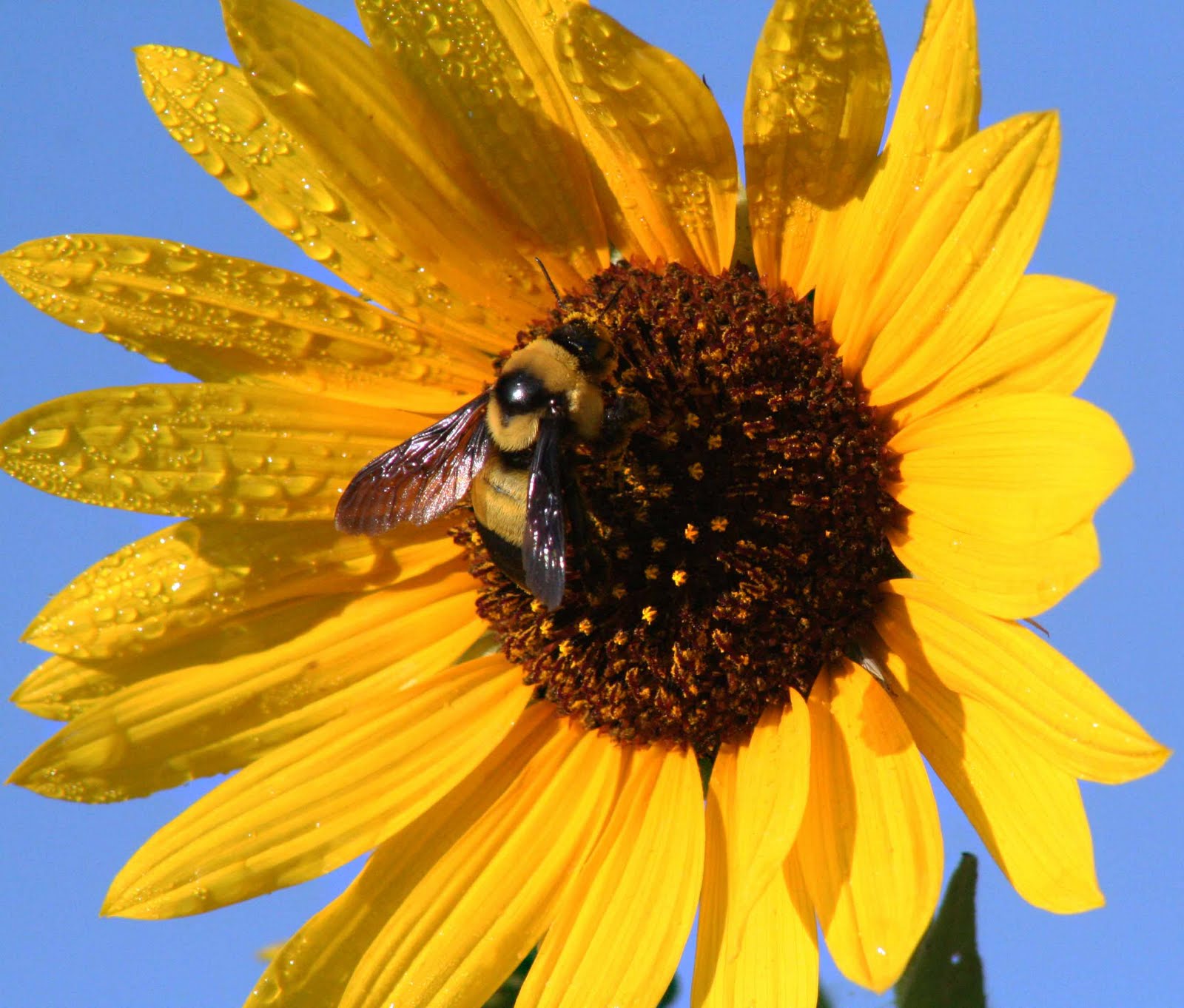
I used to write a column for the Brush News-Tribune called “Ramblin.” Now that I’m in graduate school, I realize I may a I’m not unique in my title, as I’ve learned that authors such as Dr. Samuel Johnson used similar titles – he published a book of essays called The Rambler. Fortunately, since he’s been dead for more than 200 years, he’s not likely to sue me. I was trying to convey the sense of exploration through the writing, of reaching a destination via a circuitous route. You know, the way one ambles through the countryside, poking at this and that, marveling at some treasure – a turkey track in the gravel by the stream, so large if I hadn’t seen the turkey that made the track, I’d think it was a fake; the distant tail of an aptly named white-tailed deer as they literally “high tail it” across the prairie; a sunflower sitting, covered with the morning dew.
It is rather comforting to me to discover that other people find solace in walking. I’ve found answers about how to fix poems, for example, while on a walk. Looking inspiration in the writings of others, I stumbled over a book called Walking in America, compiled by Donald Zochert. He begins and ends the book with the man that probably remains America’s most famous walker – Henry David Thoreau. As I’ve read his essay called “Walking,” I’m interested in what Zochert has chosen. The final essay, “A Winter Walk,” is lyrical and wonderful and leaves me feeling totally inadequate as a writer.
What fire could ever equal the sunshine of a winter’s day, when the meadow mice come out by the wall-sides, and the chickadee lisps in the defiles of the wood? The warmth comes directly from the sun, and is not radiated from the earth, as in summer; when we feel his beams on our backs as we are treading some snowy dell, we are grateful as for a special kindness, and bless the sun which has followed us into the by-place. (Zockert 312)
When I read Thoreau’s essay “Walking,” I was mainly jealous that he had the time to consider a day wasted if it didn’t include a four hour walk in the woods. Recently, I’ve had to abandon my 10 year tradition of a daily 45 minute morning walk – I no longer have the time – and I work in a walk as I can. Driving in to school, I see a Red-Tailed Hawk, the kind of hawk my man calls a “chicken hawk,” and I’m thrilled. I’ve seen dozens of them, and I hope that none of them realize we have chickens, and come and live up to their name. But I’m still excited, and I think – I’ve got to get out more.
I’ve substituted the walk for a mid-day workout, wedged between classes, but it just isn’t the same. I receive no inspiration while on the elliptical, just swing along until my 30 minutes are up.
Thoreau begins and ends his essay “Walking” with a well known attempt to link the act of sauntering with going to the Holy Land during the Middle Ages. He goes to great lengths to link it with the description of going “a la Sainte Terre” – or to the holy land, and it becomes “saunter” or holy-lander. Maybe. Or he said saunter comes from sans terre, without house or home, and he stretches it to mean the person is at home anywhere. He says he prefers the notion that every walk is a search for the Holy Land. He ends the piece with:
So we saunter toward the Holy Land, till one day the sun shall shine more brightly than ever he has done, shall perchance shine into our minds and hearts, and light up our whole lives with a great awakening light, as warm and serene and golden as on a bankside in autumn. (Thoreau 247 – 248)
I get that he has to have the Holy Land reference in the beginning in order to tie it with the end. As lovely as this is, I am moved more by this: “Above all, we cannot afford not to live in the present. He is blessed over all mortals who loses no moment of the passing life in remembering the past” (Thoreau 245 – 246). He speaks of listening to the rooster crow in the morning, and says: “The merit of this bird’s strain is in its freedom from all plaintiveness. The singer can easily move us to tears or to laughter, but where is he who can excite in us a pure morning joy?” (Thoreau 256). I’ll think of this when the roosters crow in the morning on the farm, as I am delighted by them, not only for their crowing but as a constant source of amusement as they rush after the hens, intent on “you-know-what” like any male of any species. Or as they stand on the top of a hay bale like a kid playing king of the mountain.
But I also find it interesting that Thoreau doesn’t talk about being tired, or frustrated, or worn out, as would a normal human being. As a result, I find it quite comforting to read an essay called “Hobnobbing” by Nathaniel Hawthorne – described by Zochert as someone who “did not walk so much as he floundered; so he confessed” – in which he talks about walking in the woods around Walden Pond long before Thoreau’s arrival on the scene. He describes his frustrations at being caught in some brambles – “Nothing is more annoying than a walk of this kind – to be tormented to death by an innumerable host of petty impediments,” (Zochert 61). And I love this guy for his honesty.
I can remember times I’ve gone on a walk and thought to myself – what have I gotten myself into? After we left Denver’s Capitol Hill, we moved to mountains above Evergreen, in a subdivision with the misnomer of “Brook Forest Estates.” These were not estates; some developer carved lots out of the mountain without any regard to the terrain, and then came along and put in roads. When we rented the little cabin, the rental agent’s first question was “did we have a four-wheel drive?” That should have been my first clue. In any event, we moved into a little 400 square foot cabin with only wood heat because it isn’t true at all that you can live cheaper in the mountains than you can in the city. By then, I had remarried and had a son, who at the age of two weighted 30 pounds. Continuing my tradition of using a backpack, I’d load him up, put the Great Pyrenees dog on the leash, and off we’d go on a walk. He loved a walk. He always wanted to hold the binoculars, to bap the mutilated bird guidebook against the back of my neck, to cheerfully hop up and down while I was trying to negotiate over rocks. One winter day, we’d circled around on the roads through the forest until we were just above the cabin. Here, we could turn around and trudge back down as we usually did, but it was beginning to snow in earnest. I decided to cut down through the forest on a snowmobile trail. Shorter would be easier, right? Forget the vertical drop. The 30 pound kid. The knee-deep snow. The dog. I finally let the dog go – she could find the cabin for sure. Ahh, those were adventuresome times.
Later in his essay, Hawthorne describes coming upon a flock of crows, and disturbing them:
But it was my impression, at the time, that they had sat still and silent in the tops of the trees, all though the Sabbath-day; and I felt like one who should unawares disturb an assembly of worshippers. A crow, however, has no real pretensions to religion, in spite of their gravity of mien and black attire – they are certainly thieves, and probably infidels. (Zochert 62)
Now, I’m laughing. This is what a walk is about – seeing things differently. You never know what you’ll see. I’m reminded of that time in the mountains and the luxury of walks in the woods, when the ravens would fly overhead. Their wings are not silent, like an owl, because their food is generally already dead, and no stealth is required. You could hear them, whoosh, whoosh, whoosh.
Why this obsession with walking? With rambling? Well, for once I can actually answer with strong memories from my childhood.
My father was a registered guide and outfitter in Colorado. By the standards of the 1950s, my parents were quite old when I was born, 33 and 34 respectively. When I was old enough to have really participated in the outfitting business, my father had moved on to Professional Rodeo Cowboy Association team roping. But when I was younger, he had all the outfitting stuff and although my mother wasn’t much of an outdoorswoman, he must have talked her into a camping trip. Otherwise, I wouldn’t have this memory.
Now, this camping trip involved a pickup truck, a huge outfitters’ tent, cots, a Coleman cook stove, and lots of cast iron. No wonder my mother didn’t want to go, the work was harder than being at home. I must have been 5 or younger, so I don’t remember the specifics, but for reasons unknown to me, we ended up erecting the tent just off a high mountain road. A gravel, back country road, little traveled, meandering along next to a little stream. Could have been somewhere near the ranch my Uncle John owned, I’m not sure. Why didn’t we go far into the woods? No horses to carry said cast iron cookware, I’m sure.
In any event, we woke up in the morning, and this memory is clear as a bell, alerted to the presence of cattle by the noise of hooves and mooing. To a small child, emerging from the tent and looking up into their bovine faces and not really familiar with the huge animals, the cows were a bit frightening. Cattle are actually curious about new things, and it was also most odd to have them all looking at us – like “who the heck are you?” My dad said (and he would know – he knew everything) that we had taken the place where the cattle normally spend the night. Bear with me, I’m getting to the point. I have this memory of my mother, standing at the tailgate of the truck, cooking breakfast on the Coleman stove. It must have been a pretty early version of one of that old reliable camper’s friend, you know the stove that you have to periodically pump up the fuel in its sealed cylinder? Pump, pump, pump, light it … cook for a minute, pump, pump, pump. What fun.
After my dad took the tent down, and leaving my mother behind to clean up after breakfast, my father and I went for a walk. And that’s the point. He knew the names of plants – skunk weed and wild lettuce – he pointed out various types of rocks – granite and quartz – which we promptly loaded up into the truck to take home. I vividly remember the joy of time with my dad, of exploring to see what might be there, of closely examining what was in the stream, of holding his hand as we walked along the road.
I remember another time – we had just moved to the country, which meant I was six and entering the first grade that fall. Our house was carved out of an original homestead and we had our own five acres, and the neighbor had their five acres, and the homestead next door had some acreage also. The original two-story home still stood next to our house, and as I grew up, I was fascinated by the small house, which still had the original wood cook stove inside. But the property was bisected by a railroad track that for years yielded loads of fun for us neighbor kids when we’d run out and wave at the guys in the caboose as they went by every evening; I’m sure my mother was anxiety ridden that we’d challenge the train and end up getting ourselves killed.
In any event, maybe to get me out of my mother’s hair more than anything else, one day, perhaps on the day we moved in, my father and I went on a walk down the train tracks. We had this little Dachshund dog, the kind people called “wiener dogs.” She was a silly little thing, the type of dog a woman owns, a town dog if there ever was one, but she came along with us. Like all dogs, she was an avid sniffer and explorer and she spent her time frenetically dashing about in pursuit of rabbit scents. The area featured a couple of watery irrigation ditches that basically ran dry in the fall – later I was to learn that they ran full and scary in the spring. But this time, we were strolling along the train tracks, I’m trying out the never-ending process of learning how to walk on the rails, when there’s a splash below us as we cross over the little creek and the little dog is climbing out of the water. It seems she’d mistaken the algae on top of the water for grass, (my father explained to me, and remember, he knew everything) and tried to walk across the water. We had a great laugh at her expense. One never knows with dogs, but it’s always seemed to me she looked a little embarrassed.
To be with my dad meant adventure, and every chance I got, I followed him. To have a sense of adventure also means accepting what comes your way. One day, the adventure might be just holding a flashlight while he worked on a car, but the next time might be something really dramatic, like the time I fell off a horse when I was in the third grade, and broke my arm. Or the time when I was about 12 and we went to my uncle’s ranch and herded cattle. I got to bring the bull back to the ranch house all by myself. I’m assuming my father did these things without telling my mother, who probably would have had a fit had she known. This was the same trip to the ranch where the men had carefully separated the cows from the calves, and she left a gate open and they had to start over again. My poor mother. If anyone was kicked or bitten, it was her. One time a horse kicked her full-out, at the fullest extension of its leg, and my mother’s entire leg turned black and blue, and there was a distinct hoof impression on her jeans. I grew up thinking women were weak, and really didn’t want to be one.
Now, as a young girl, my options were limited. My chore was ironing – we ironed everything except underwear. (Oddly enough, to this day, I don’t mind ironing. I like bringing order out of chaos. Reflecting as an adult, I figure my mother didn’t like to iron, so it fell to me.) Not that my mom didn’t try to initiate me in the ways of womanhood. I remember the agony of mis-shaped knitted hot pads; the frustration of tearing out stitches from an inadequate blouse. Oh, and the inability to thicken gravy suitably or load the dishwasher correctly.
I do remember playing “pioneer woman” which primarily entailed wearing a long dress and trying to look brave. Mainly, I hung out with the neighbor boys and tried to live up to my father’s expectations.
I remember when he taught me to drive. I was about 14, and, tagging along as usual, we were at the Saddle Club repairing fences. Without advance notice, he told me to go get the 1968 GMC pickup truck and bring it around. It was a tank. Now, no one told me two important things – one that there’s a “granny gear” in those trucks, and you can press in on the clutch and gas at the same time. As you can imagine (I can hear you laughing from here) the result was a lurching trip. But at least I was willing to try. I realize now that if I hadn’t been willing to try he would have waited until I was 16 and he had to teach me. As it was, I had some lessons in parallel parking and driving with both the clutch and gas.
Years later, he told me his goal with his only child was to challenge me just beyond what he thought I could do; probably so I’d do the same thing with my daughter. He’s gone now, but I know he’d be so delighted in how Ellen is so practical and prudent. I learned also that men are mysterious creatures to women – that they issue challenges when we would nurture; that they see nothing wrong with waiting to see what you will do first; with endless teasing is fine with them; that they want both to be rivaled and unquestionably obeyed.
I entered my mother’s world with the birth of Ellen when I was newly-married at age 18, almost 19, as I tried to remind people. Suddenly, I was making granola (this was the 70s, remember) with another young married friend, interested in doing the laundry correctly, and figuring out how to puree and save baby food. My grandmother came over and taught me how to bake bread while marveling at her great-granddaughter. Once again, my grandmother (Dad’s mother) was my support and rock, and my mother hovered around the edges, making me feel inadequate because I breastfed without a schedule and refused to leave my infant daughter alone to cry. (About breastfeeding, Grandma said “If they don’t like the look of it, they can look away.”) Once again, Mom tried – she bought some used baby furniture for us, and supplied the cloth diapers. Made me one good maternity dress which I wore over and over again to church. (Dad used to say my mom was “as tight as the bark on a tree.”) Realizing this legendary Scottish thriftiness, I guess I should have appreciated her gestures more, but I didn’t.
As time has gone on, and I’m now as old as my parents were when they were divorced, I realize I shouldn’t have only wanted my father’s approval – perhaps some of my trouble with my mother was I wouldn’t meet her where she lived. I never learned how to sew, and she could make pie crust that was to die for, and meringue that stood three inches from the filling, but I never cared to learn from her. By rejecting her for what I perceived as her weakness, I never learned her strengths. Now, as a farm wife and since her death, I wish I had learned how to make jelly from her, and honored her for what she knew.
I should have figured out how to walk with both my father and my mother.
Works Cited
Thoreau, Henry David, The Concord Edition: Excursions Poems and Familiar Letters. Boston, Houghton Mifflin Company, 1929
Zochert, Donald, ed. Walking in America. New York, Alfred A. Knopf, 1974





 Life is as Sweet as Cotton Candy